Coffee Extraction Explained: Strength, Yield, and the Brewing Control Chart
3 min read · Updated 2026-11-26
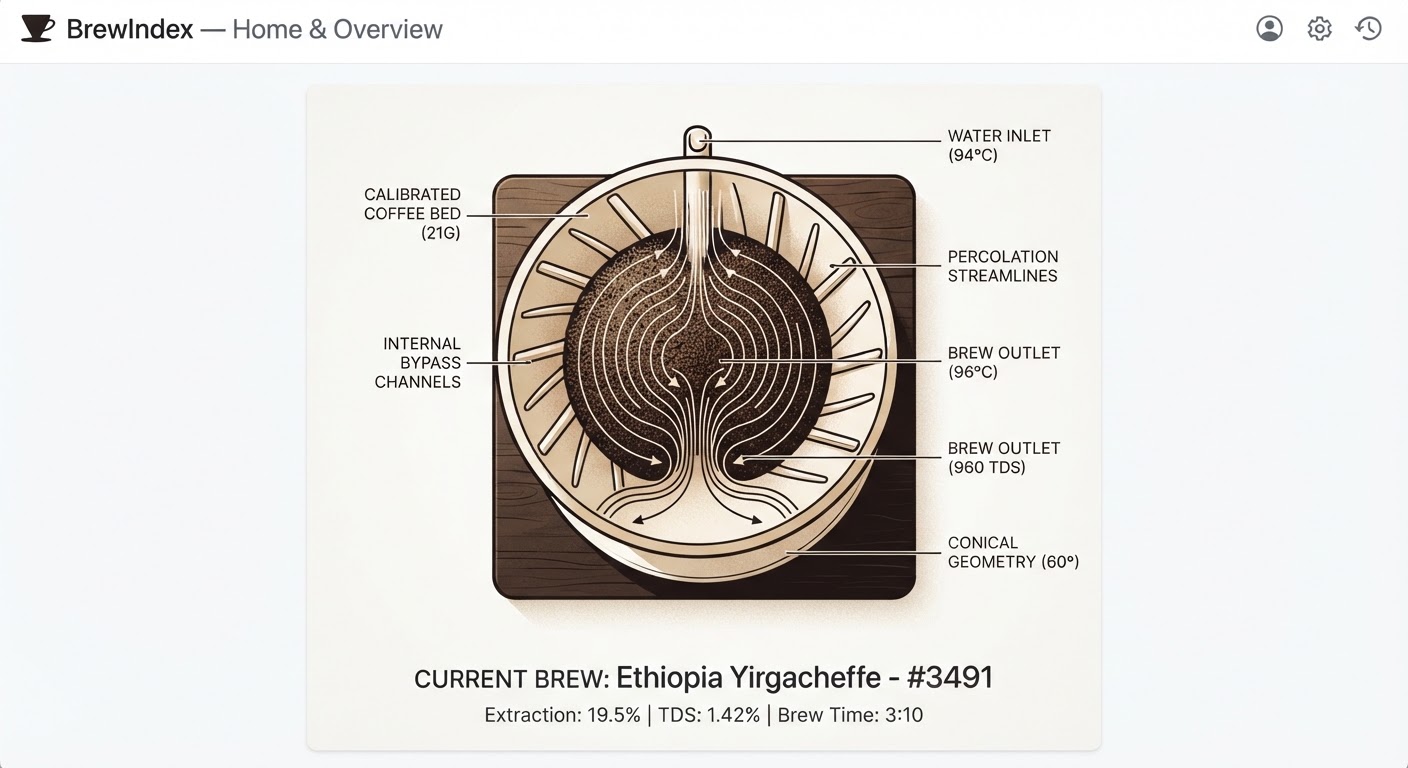
What extraction actually means, the two numbers that describe any brew, and how to use extraction thinking to fix the taste of your coffee.
What extraction is
Brewing is extraction: hot water dissolves material out of ground coffee and carries it into your cup. Not everything in a roasted bean can dissolve - research summarized in the coffee literature puts the dissolvable fraction at roughly a third of the bean's mass - so every brew is a question of how much you take out, and what.
Different compounds dissolve at different speeds. Bright, acidic, and sweet compounds come out early; heavier bitter and astringent compounds come out later. That is why the balance of a cup shifts as extraction progresses, and why brewers care about how far extraction goes, not just whether it happens.
Two numbers: strength and yield
Any brew can be described with two measurements. TDS (total dissolved solids) is strength: the percentage of the beverage that is dissolved coffee. A filter coffee at 1.30 percent TDS contains 1.30 grams of dissolved coffee per 100 grams of liquid. Extraction yield (also called percent extraction) is the share of the dry coffee dose that dissolved into the brew: extraction yield equals TDS times beverage mass, divided by dose.
They are independent. A strong coffee can be under-extracted, and a weak coffee can be over-extracted. Keeping the two concepts separate is the single most useful mental upgrade in brewing.
The brewing control chart
In 1957, coffee scientist Ernest Lockhart published work linking cup quality to TDS and extraction yield, culminating in the classic Coffee Brewing Control Chart, described in an SCA article on the chart's history and its modern update. The chart plots extraction on one axis and strength on the other, with diagonal lines marking brew ratios.
Its famous center box - roughly 1.15 to 1.35 percent TDS and 18 to 22 percent extraction for drip coffee - became known as the Golden Cup standard and still anchors industry training. Low extraction was labeled under-developed (often read as sour or grassy), high extraction bitter, and high or low TDS strong or weak.
Reading taste as extraction signals
The chart's taste map is a useful starting heuristic. Sour, salty, thin cups usually signal under-extraction; bitter, harsh, drying cups usually signal over-extraction. Research from the UC Davis Coffee Center complicates the picture in interesting ways: their sensory work found that sourness rises with strength but falls as extraction increases, and that perceived sweetness can peak at lower strength and extraction - so the classic chart is a map, not the territory.
The everyday takeaway still holds: when a coffee tastes off, ask whether the problem is strength (fix with ratio) or extraction (fix with grind, time, or temperature).
Using extraction thinking at home
You do not need a refractometer to brew by extraction. Use taste as your instrument: if the cup is sour and sharp, extract more - grind finer, brew longer, or raise temperature slightly. If it is bitter and hollow, extract less - go coarser or shorter. Change one variable at a time and keep notes.
Strength is the second dial: once the flavor balance is right, adjust the ratio to make the cup stronger or weaker without disturbing extraction. That two-dial model - extraction for balance, ratio for strength - resolves most home brewing problems.
Common questions
What is coffee extraction?expand_more
The process of water dissolving soluble material from ground coffee into the brew; extraction yield is the share of the coffee dose that dissolved.
What is the difference between TDS and extraction yield?expand_more
TDS is brew strength - dissolved coffee per unit of beverage. Extraction yield is how much of the dry coffee dose dissolved. A brew can be strong yet under-extracted, or weak yet over-extracted.
What does over-extracted coffee taste like?expand_more
Typically bitter, harsh, and drying. Under-extracted coffee tends to taste sour, salty, or thin.
What is the Golden Cup standard?expand_more
The classic brewing control chart's target zone for drip coffee: roughly 1.15-1.35% TDS and 18-22% extraction.
Put it into practice
From the database
Sources
- Towards a New Brewing Chart | 25, Issue 13open_in_new
Specialty Coffee Association · Industry Organization · Accessed 2026-11-26
- Extraction yield and TDSopen_in_new
Coffearium · Other · 2026-10-10 · Accessed 2026-11-26
Last verified: 2026-11-26