Coffee Grind Size: A Practical Guide for Every Brew Method
3 min read · Updated 2026-11-26
What grind size actually controls, how to match the grind to your brewer, and how to fix sour or bitter coffee by adjusting the grind.
What grind size controls
Grind size controls how quickly water can dissolve the flavorful material inside coffee. Finer grounds have far more surface area, so water extracts from them faster. Coarser grounds present less surface area and extract more slowly. That single fact drives almost every grinding decision: match the grind to how long the water and coffee will be in contact.
Grind size is one of the most powerful variables in brewing because it changes both how fast extraction happens and how fast water flows through the coffee bed. In a percolation brewer like a V60, fine grounds slow the drawdown; in an espresso machine, they create the resistance that builds pressure.
Matching grind to brew method
The longer water and coffee stay in contact, the coarser the grind should be. Independent grind research from the Honest Coffee Guide puts espresso in a narrow band of roughly 180 to 380 microns, pour over brewers like the V60 around 400 to 700 microns, drip machines around 300 to 900 microns, and French press around 690 to 1300 microns. Cold brew, which steeps for many hours, uses a similarly coarse grind.
As a tactile reference, espresso grind feels like fine table salt, pour over grind like sand, and French press grind like coarse sea salt. These are ranges, not targets - your grinder, your coffee, and your taste decide the exact point inside them.
Why contact time is the deciding factor
Percolation methods (pour over, drip, espresso) push water through a bed of coffee, so contact time depends partly on how fast water can flow through the grounds. Immersion methods (French press, cold brew, cupping) let coffee sit in water, so contact time is set by you.
This is why immersion methods are forgiving: a French press brewed for four minutes works with a coarse grind, and steeping longer lets you compensate somewhat for a slightly finer one. It is also why espresso is unforgiving: contact time is short, so only a fine, consistent grind extracts enough in 25 to 30 seconds without choking the machine.
A useful mental model: grind size and brew time are interchangeable dials for the same goal. You can reach a similar extraction with a fine grind and short contact, or a coarse grind and long contact. What you cannot do is pair a coarse grind with a short brew - the water simply passes through before it can dissolve enough, and the cup tastes sour and weak no matter how much coffee you add.
Dialing in: fixing sour and bitter cups
Grind adjustment is the main tool for fixing extraction problems. If your coffee tastes sour, sharp, or salty, it is likely under-extracted - grind finer to give the water more surface area to work with. If it tastes bitter, harsh, or drying, it is likely over-extracted - grind coarser.
Change one step at a time and taste the result. Keep dose, water, and temperature constant while you dial in, or you will not know what caused the change. In pour over, use your drawdown time as feedback: if the water races through, go finer; if it stalls, go coarser. Our brew timer helps you track that consistently.
Consistency matters as much as size
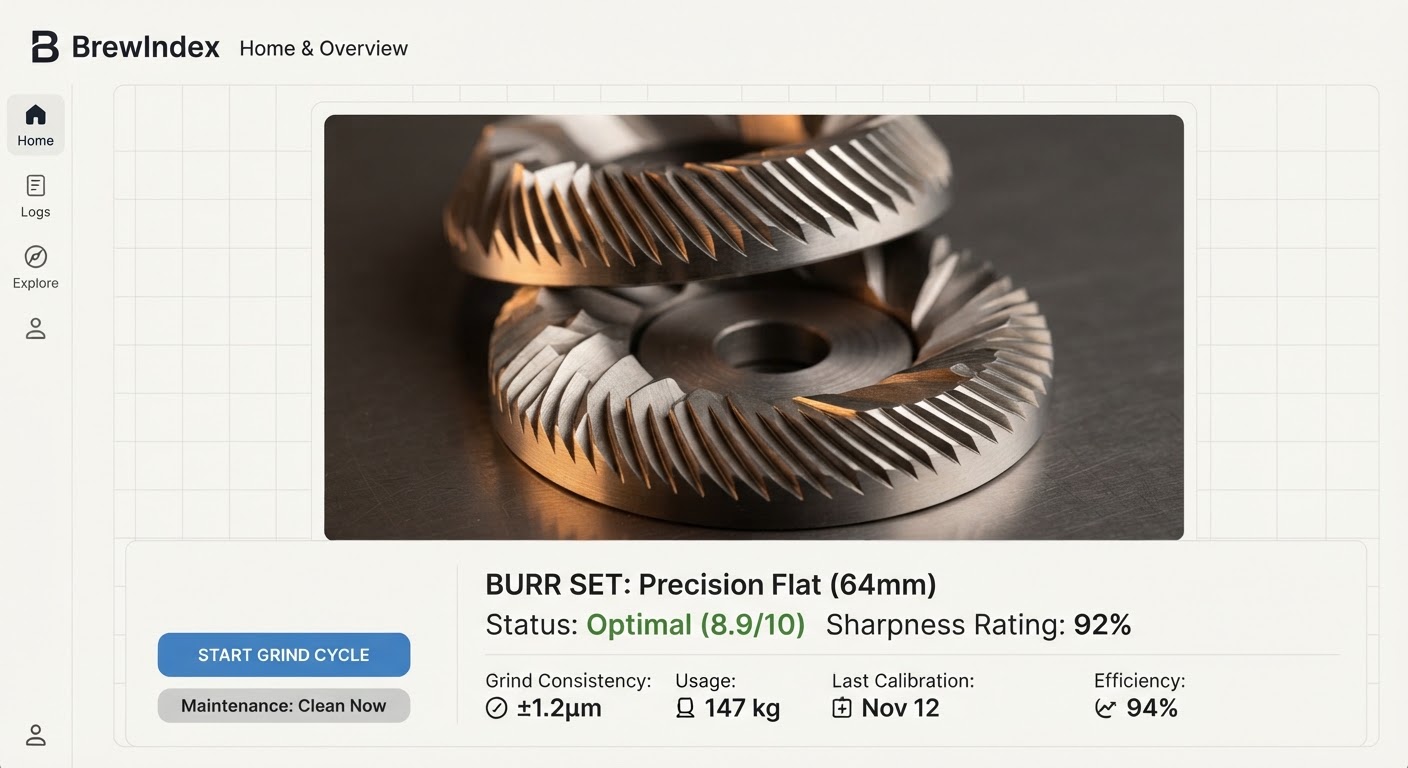
A grind setting is only half the story - the spread of particle sizes matters too. A grinder that produces a mix of dust and boulders extracts unevenly: the dust over-extracts and turns bitter while the boulders under-extract and stay sour. Burr grinders produce a much more uniform grind than blade grinders, which chop beans randomly.
Grind fresh, right before brewing. Ground coffee loses aroma quickly, and a uniform fresh grind is the easiest upgrade most home brewers can make.
Common questions
What grind size should I use for a V60?expand_more
Start around medium-fine, roughly 400-700 microns, and adjust by taste and drawdown speed.
What grind size is best for French press?expand_more
Coarse, roughly 690-1300 microns, for a standard four-minute steep.
My coffee tastes sour. What should I change?expand_more
Grind finer. Sourness usually signals under-extraction.
My coffee tastes bitter. What should I change?expand_more
Grind coarser. Bitterness and harshness usually signal over-extraction.
Put it into practice
From the database
Sources
- Coffee Grind Size Chartopen_in_new
Honest Coffee Guide · Coffee Professional · 2019-05-14 · Accessed 2026-11-26
- Hand Grinder Grind Size Guideopen_in_new
Prima Coffee · Coffee Professional · Accessed 2026-11-26
Last verified: 2026-11-26