Water for Coffee Brewing: Minerals, Hardness, and What Actually Matters
3 min read · Updated 2026-11-26
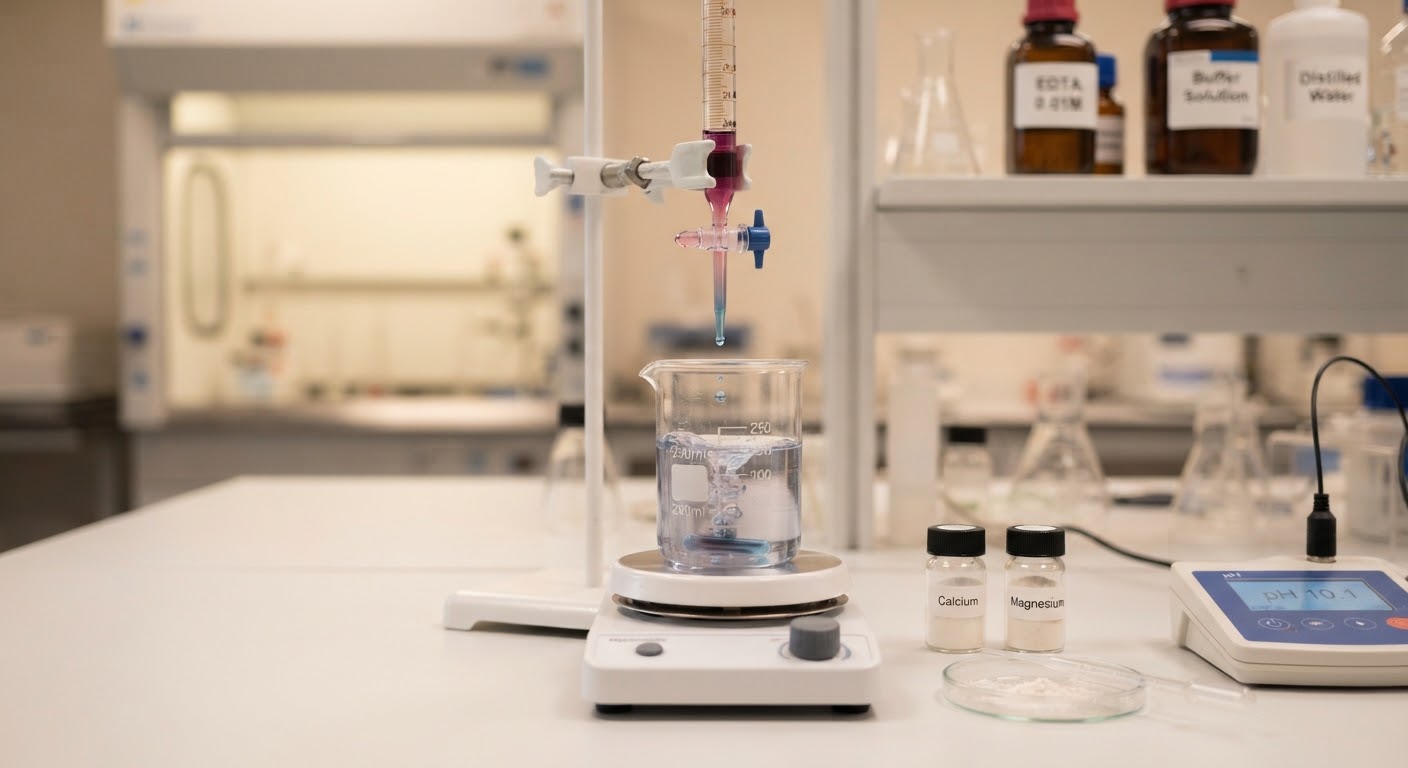
Why water chemistry changes your coffee, the SCA's published water parameters, and practical ways to improve your brew water at home.
Coffee is mostly water
A cup of filter coffee is roughly 98 percent water, as Perfect Daily Grind points out - so the water is not a neutral backdrop, it is the main ingredient by mass. Water is never just H2O either: it carries dissolved minerals, mainly calcium, magnesium, and carbonates, and those minerals change how coffee extracts and how it tastes.
The same beans brewed with different water can produce noticeably different cups. If your coffee tastes dull at home but vibrant at a café using the same beans, water is a prime suspect.
The SCA water parameters
The Specialty Coffee Association publishes target characteristics for brewing water, built from decades of extraction research. The figures commonly cited from that standard: total dissolved solids of 75 to 250 ppm with about 150 ppm as a target, pH near neutral around 7 (roughly 6.5 to 7.5), total alkalinity around 40 to 70 ppm as CaCO3, and water that is clear and free of odor - particularly chlorine, which masks coffee aromatics.
These numbers balance two goals at once: enough minerals to extract flavor properly, and few enough scale-forming minerals to protect kettles and espresso machines.
Alkalinity matters more than pH
It is tempting to obsess over pH, but SCA magazine research by water chemist Marco Wellinger argues that alkalinity - the water's buffering capacity - has a far larger effect on the acidity of the final cup than pH does, as long as pH is near neutral. Alkalinity neutralizes coffee acids; too much buffering flattens brightness, too little can leave a cup sharp and unbalanced.
The same work notes that the right water depends on the brew ratio: concentrated methods like espresso present much less water per gram of coffee than filter brewing, so water suited to espresso differs from water suited to filter.
Hard water, soft water, and chlorine
Very hard water - heavy in calcium carbonate - tends toward chalky, muted cups and accelerates limescale buildup in equipment. Very soft or distilled water lacks the minerals that help extract flavor and often produces flat, hollow coffee; pure distilled water is generally not recommended for brewing on its own.
Chlorine is a separate problem. Municipal chlorine is fine for safety but hurts coffee aroma, and it is easy to remove: a basic activated carbon filter, the kind in common filter pitchers, handles it.
Practical ways to improve your water
Start by learning what you have: a cheap TDS meter and your municipal water report tell you a lot. From there, the realistic options for most homes are a carbon filter pitcher for chlorine and some hardness, blending tap water with distilled water to bring high TDS down, or using distilled or reverse-osmosis water with added minerals for full control.
You do not need laboratory water to brew well. Clean, chlorine-free water with moderate mineral content gets you most of the way; the rest is refinement.
Consistency is worth more than perfection here. Water that is slightly outside the ideal range but the same every day will produce repeatable coffee you can dial in, while water that swings with the seasons or the municipal supply forces you to re-adjust constantly. Pick a water approach you can sustain, note how your coffee tastes, and only then chase finer improvements.
Common questions
What is the best water for brewing coffee?expand_more
Clean, odor-free water with moderate mineral content - the SCA cites 75-250 ppm TDS, near-neutral pH, and low-to-moderate alkalinity.
Can I brew coffee with distilled water?expand_more
It is not ideal on its own. Very soft water extracts poorly and tastes flat; add minerals or blend with tap water.
Does hard water ruin coffee?expand_more
Very hard water can mute flavor and scale equipment. A carbon filter or blending with softer water usually helps.
Does water temperature interact with water quality?expand_more
Yes - both affect extraction, but they are separate variables. See our brewing temperature guide for the thermal side.
Put it into practice
From the database
Sources
- Water and Coffee Acidity: How to Adapt Your Water for Different Extraction Methods | 25 Magazine, Issue 9open_in_new
Specialty Coffee Association · Industry Organization · 2019-05-25 · Accessed 2026-11-26
- How can you make water perfect for brewing coffee?open_in_new
Perfect Daily Grind · Coffee Professional · 2022-04-19 · Accessed 2026-11-26
- What is SCA Water Standard? Complete Guide to Coffee Brewing Water Qualityopen_in_new
Third Wave Water · Equipment Manufacturer · 2025-11-19 · Accessed 2026-11-26
Last verified: 2026-11-26